Hi,
Its just a simple push , which got pushed into a short story.
Its been revieved on 11 secs club, so the final version is gone many places.
Have fun
29 July 2009

12 June 2008
Time & Decisions
Working on an animation project can be intensive. other than the previously mentioned objects, the net which can be used for a 101 things everyday, books on specific topic, be it Animators survival kit, or An anatomy book, or maybe, Disney’s Illusion of life , or Shot by Shot, or something on storyboards. You never know where you might need to check up on something, thus it is important to either have them before, or know where they can be got at quickly.
Time is of essence, time is not only money, but it keeps things moving in the right direction. let me explain, I have been working on story boards & this is the third. Every time we draw it, we realize that we have improved. Then the question that comes to mind is when we really stop, I mean like this can go on & on, there is always scope for some improvement, right.
Well here it is important to be clear that the possibilities are many , but to be able to do it in the pre decide. time is of utmost importance, other wise any creative person can go on without knowing when to stop & that is the enemy of good work. It is not necessary that just because you are putting time, the work will be good.
Tough decisions needs to be taken at such times, so things are always on the move, sometimes slow, but always steady. Thats what we did, we decided that the storyboard stage is done. Thus we will move into the next stage, logically it is the animatics stage, but maybe we might just take a shot for animation just to get ready for what is coming. We could also do both side by side.
That will come in the next post, till then
Have fun...
Id Animation & Arts
Time is of essence, time is not only money, but it keeps things moving in the right direction. let me explain, I have been working on story boards & this is the third. Every time we draw it, we realize that we have improved. Then the question that comes to mind is when we really stop, I mean like this can go on & on, there is always scope for some improvement, right.
Well here it is important to be clear that the possibilities are many , but to be able to do it in the pre decide. time is of utmost importance, other wise any creative person can go on without knowing when to stop & that is the enemy of good work. It is not necessary that just because you are putting time, the work will be good.
Tough decisions needs to be taken at such times, so things are always on the move, sometimes slow, but always steady. Thats what we did, we decided that the storyboard stage is done. Thus we will move into the next stage, logically it is the animatics stage, but maybe we might just take a shot for animation just to get ready for what is coming. We could also do both side by side.
That will come in the next post, till then
Have fun...
Id Animation & Arts
28 May 2008
The workplace
Hey ya folks! Apologies for the delayed post. But our workload has kept us away from the blog. Believe me, FILM MAKING IS NOT EASY!


Id Animation & Arts
We are not posting any artwork or the usual stuff today. Let’s just get a bit diverted from the regular gist. Today we present our STUDIO.
Shade is a project executed in our
It is very important to build a workplace which LOOKS like a workplace entirely dedicated to what you are doing. The environment is lively when there are sketches and notes dangling on the walls, pencils are lying here and there, and the town is covered with all the creative clutter. (Of course it is nice to keep everything in place and properly managed) but you know that a kid needs a good and healthy environment to grow, we are no different.
When we get into this space, we kind of go into a work zone, of limits to every other thought. All the drawing, design & ideation is for what we are doing. It is an important part of a creative set up, where personalization of the work space with drawings, stuffed toy, rigs, clay models & clay, armature, rough sketches ,pencils, reference models or sheets along with a bottle of water, maybe a pack of biscuits all take up this creative space.


Id Animation & Arts
24 April 2008
Live Shoot
As promised, here is the video of the Live shoot we had done for the reference. The experience was awesome watching people act for our character.
We gathered all our juniors and fed them in with the concept. Then, we gave them time to think and get into the character and environment which they were supposed to act. One by one we shot the act outs. The acting was kept open for them to interpret. We decided that it should come from the actors initially and then we’ll put in our inputs to enhance and specify the characterization. So we had a second round, which was much better than the first.
We are now drawing the poses by referring to this footage. It will help us on building the animation path and understanding the timing.
We’ll get back to you with some dynamic poses for animation drawn with this footage’s help.
Cheers!
Id Animation & Arts
We gathered all our juniors and fed them in with the concept. Then, we gave them time to think and get into the character and environment which they were supposed to act. One by one we shot the act outs. The acting was kept open for them to interpret. We decided that it should come from the actors initially and then we’ll put in our inputs to enhance and specify the characterization. So we had a second round, which was much better than the first.
We are now drawing the poses by referring to this footage. It will help us on building the animation path and understanding the timing.
We’ll get back to you with some dynamic poses for animation drawn with this footage’s help.
Cheers!
Id Animation & Arts
10 April 2008
Students Say- STORYBOARDS……..not again
Ok, a new phase is taking over. We thought the storyboarding for SHADE is done. Right? We were wrong. Not completely but still uncomfortably to some extent.
There are different ways and methods and styles and approach and intentions and necessities (ok too many ‘ands’…sorry.) for storyboarding. A storyboard (ahh… such a long word. Would it be ok if we call it Sboard?) For a film will be drawn differently than a Sboard for a 21 min animated series. Similarly there is a huge difference between the Sboard for a live action film and for an animated film. Many amateurs think that it is the same thing (as did we.)
Sboards for film are normally shot by shot representation of the scenes. They are not often too detailed. The flow and what is going to happen in the shots is illustrated but not how it happens. It is left for the direction or the actors to perform.
In animation though, Sboards are very well detailed showing all the scenes and the motion or action in the scene. The actual animation is described in each shot to clarify the story, drawing sometimes the major key frames of animation. (man! Its too detailed….) The simple reason for this is that you cannot take any risks for a reshoot in animation, while there can be hundreds of takes in a live action film. Thus the cost & the amount of work make it unaffordable. You have to be sure that your film is ready lock, stock and barrel on the paper first so that you don’t have to think over and try on the production.
So the new phase is simply that we are going to break up the shots from our Sboard and try to draw the performance in it because we had been under the impression that the Sboard we drew (which were a shot by shot progression like live action) would be enough for our short film. But with the alarm clock sounded by our teacher, woke us up to our mistake.
I think that the way you draw the Sboard should highly depend upon what is your film’s requirement. (And believe me I am perfectly right) you should carve your style yourself as you know (hopefully) what justifies your film.
We’ll get back with the breakups and some expression sheets later. See ya!
This is an excerpt of the story progression we had designed.


Id Animation & Arts
There are different ways and methods and styles and approach and intentions and necessities (ok too many ‘ands’…sorry.) for storyboarding. A storyboard (ahh… such a long word. Would it be ok if we call it Sboard?) For a film will be drawn differently than a Sboard for a 21 min animated series. Similarly there is a huge difference between the Sboard for a live action film and for an animated film. Many amateurs think that it is the same thing (as did we.)
Sboards for film are normally shot by shot representation of the scenes. They are not often too detailed. The flow and what is going to happen in the shots is illustrated but not how it happens. It is left for the direction or the actors to perform.
In animation though, Sboards are very well detailed showing all the scenes and the motion or action in the scene. The actual animation is described in each shot to clarify the story, drawing sometimes the major key frames of animation. (man! Its too detailed….) The simple reason for this is that you cannot take any risks for a reshoot in animation, while there can be hundreds of takes in a live action film. Thus the cost & the amount of work make it unaffordable. You have to be sure that your film is ready lock, stock and barrel on the paper first so that you don’t have to think over and try on the production.
So the new phase is simply that we are going to break up the shots from our Sboard and try to draw the performance in it because we had been under the impression that the Sboard we drew (which were a shot by shot progression like live action) would be enough for our short film. But with the alarm clock sounded by our teacher, woke us up to our mistake.
I think that the way you draw the Sboard should highly depend upon what is your film’s requirement. (And believe me I am perfectly right) you should carve your style yourself as you know (hopefully) what justifies your film.
We’ll get back with the breakups and some expression sheets later. See ya!
This is an excerpt of the story progression we had designed.


Id Animation & Arts
25 March 2008
MASTERS & Some more Storyboards
This blog has given us the opportunity to talk about Animation in detail like never before on the Indian Animation Scenario.
Internet technology changed the way we learnt animation & now it is making it possible to share it with the world audience. Yes we have had hits from all across the world on the SHADE blog.
Storyboards, so very little is known about them & the truth is personally, I have never met a single story board Artist in the ten years that I have been in the Indian Animation Industry. The future will be different, no doubts there for sure.
In our research for SHADE- we looked at many Storyboards/Artists to learn how they are constructed & understand how best we should build ours.
Out of the many, we liked this one very much, as it was simple & we thought it was very easy to read.
It was a good starting point & after studying it closely we used all that info to draw the Storyboards of SHADE.
http://www.animationarchive.org/2007/03/story-greatest-cartoon-writer-of-all.html
Yogi Bear was created by William Hanna and Joseph Barbera, the guys who also created the Tom & Jerry.
Asifa Archives has been our back yard & we got whatever we were looking for. It has made it possible for us to get hold of the best works of the greatest animation masters. So in a way it is Ironic that the look into the past is helping us build the present.
Tomorrow, we will reveal the Indian Connection & look into the history of some Indian Animation, a few gems in our not so glorious past.
See ya then
Have fun
20 March 2008
Director speak
More about storyboards-1
A storyboard is creating the film on Paper,so the final film is a mirror of the Storyboard
Here are some very simple doodles from a living legend & creator of show like Ren & Stimpy- John Kricfaluci.
Most of you may have never heard of him or his work making very cartoony cartoons, so here goes one up on our effort to bring some greats who have helped us understand & learn this craft better.
The link below is a post on the Animation Archive site; it is dedicated to restoring & Archiving of the best animation work to come out of
We have gone to this site so often & still the wealth of information & articles on Art, Artists, companies & everything connected to the animation arts is unlimited & amazingly so vast that a life time would not be enough.
From this Gold mine we wish to introduce you to John K as he is known widely & some of his storyboards from the, now Path breaking animation show Ren & Stimpy.
http://www.animationarchive.org/2006/03/media-john-ks-storyboard-for-stimpys.html
For those who are following our posts, we hope they enjoy this link & what will follow an eye opener to the REAL world of Animation.
Enjoy & we still want to hear from you.
The follow up of this post will reveal another Jewel with a very INDIAN connection.
Till then , have funId Animation & Arts
05 March 2008
The Start of the final leg of pre-production
Now the style is decided, we have gone back to the drawing board, as we have a new challenge. Firstly we are looking at how do all the characters adapt how to the background. The characters are also being refined to become more animation friendly.


It is still not suitable for animation. It looks good and justifies the concept but the edgy and indefinite lines will be complex for animation. We have planned to draw the outlines then take it for coloring somewhat like in the last picture.
The storyboard is not finalized because it is not pitched yet.
Pitching means presenting and selling your content before the board of producers and directors. (We don’t have any producers, as we ourselves are producing it). Also the initial pitching did happen when we created & dropped quite a few good concepts before we zeroed onto this one. The entire process has it own life & takes its own time. As we had wanted this short to mirror our artistic aspirations, so we took our own time to come to this stage.
When you PITCH, it can be at different stages. First when you have a concept competing with others, and you have to put it forward in such a manner that the audience (Producers/Director) has to buy it. Now we have to pitch the story telling and Appeal that should be visible in the storyboards as we understand it. More about Pitching in detail in the later posts.
So when you PITCH, the worth of your Short to go thru to the final stage is judged by the performance of your content. It should appeal to the people in front of you. If it can’t tell a story here, how will it express itself to the audience? This is the second draft of the storyboard being made and it will be evaluated tomorrow..
Id Animation & Arts
22 February 2008
How we decided this painting...

As promised, I will tell you about how we come to decide this concept design as our final choice for the look of the film. Frankly, we were in a tight spot on this one & took us quite some time to decide. Many designs, each beating other, were made. We were trying styles which would best compliment the theme and concept of the story. The deadline was set, but due to not getting the required results, we continued the process. We then short listed 4 or 5 designs and reworked on them & more re-work according to the suggestions and reviews we were getting.
But we were not happy with the results. They looked good, but maybe our eye was dead to them. Maybe we had become so used to working on them, that they didn’t seem to fit. They didn’t look fresh to us. So we got an external audience to have a look at it, but heir choice didn’t help either
None of us working on it could come to agree, each would have differing views .
Then, not much happened over some time as we got busy with the GameStorm , Pune’s first Gaming major event, till then the rough storyboard had begun.
After our comeback , one of our colleague who hadn’t worked on any of the previous design was given the task to have a go at it. His effort as placed with some of the others designs for one last final round.
That day it had to choose, and with much discussion and thinking on the finalists; we chose this as the winner.
It has got a sense of simplicity and infinity. It does not limit the scenario and it will also not bring scores of intricacies in the Animation.
It was a mental block which held us for a long time and there is a possibility that it will come again. We learnt to fall back on our experience and understanding of the basics to pull us thru whenever struck. This was one of them.
These were the finalists shown below.


19 February 2008
Sorry for the delayed post folks!
We were busy for the preparation of Pune’s 1st biggest GAME EVENT “GameStorm” held at MIT College of Engineering, Pune. It was an awareness program in which many big names such as Zapak, Kreeda, Jump games, Verisoft, NVIDIA, MCCIA and of course our
The keynote was presented by Matthew from EA games and Laura Dohrmann from NVIDIA.
We took this opportunity to display the concept & 3d designs of our 3d (third person) game ‘Quest of Fate’ in this event. Yes, we are also into 3d game design training, & this project is part of that training. If any of you would be interested you could check out this link GamePro. Also we have begun to blog our game work, so now you have more to watch out, thou the posts won’t be as regular as Shade. Similar to this blog, it will also showcase the entire process of how a GAME is conceptualized & designed in 3d. All I will tell you is, that it is very different than making a Short Film.
Coming back, to all the short film buffs, we are going to be regular (Promise) in our posts for Shade. The Good news is, we have decided the style in which we are going to make the film. (See below). This is the design we think is best suited for the concept. Now we are going to make some of the storyboard panels in this style and see how it looks.
Our first milestone has been achieved in some sense that we were stuck with the decision making so long. But persistence payed of & now we are set to move on. In the next post we will talk some more about how we finally came to decide.
Have fun & pleeeeeeeeeeeeeese tell us what you think.
31 January 2008
LIVE SHOOT
Achievement! The first attempt to the storyboard is done. Though not ultimately the final one, it is a good enough foundation to kick off for the LIVE SHOOT. Yes. We are going to shoot whole of the film LIVE with a handy cam. A kind of live animatic. We are going to make a proper CG animatic later, but to get a more clear understanding of the visual story flow and timing; live shoot is the best and FAST way to attain results.


 We can pre visualize the acting, emotion and effects of the film really fast and apply it. Some of our own people from the team will act and imitate the characters of the story, which are a man, a bird of prey and a tree. We cannot afford to make any mistakes in the actual production of the film as many of you may know what it costs in animation. For those who don’t know, tell you that it costs really a
Is it understandable? Does it connect to the audience? Are all the shots timing perfect so as to move the story smoothly on screen? That is why it is so important to shoot live. We don’t know if this method is usually followed, but we know for sure that it helps. We will get our movie ready, SHOT AND EDITED. Then there is only a matter of making it CG. Of course that is not easy as it sounds here ;-)
Keep in touch for some of the footage of the LIVE SHOOT of the film.
Storyboard


16 January 2008
Visual road map — Storyboarding
Storyboarding is helpful to get the visual understanding and flow of the story. They are like comic panels which tell the story in a still picture format. It will later be converted into Animatics (will be described later). This storyboard is done without an actual script. It has been done as the story flowed in the mind continuously. We didn’t focus on the script prominently because the idea is still open for interpretation (& still no inputs received from u people!) and the camera angles can be drawn as they are best suited for the story. We kept the visualization very amenable to change.
The storyboard is not yet completed and we hope that the look development will be finished concurrently with it.


02 January 2008
A classic look....


After lots of review & R&D, soon will finalize the style, above images comes close to what we are working, any suggestion or comments invited!
28 December 2007
Director Speak
It is one of those moments, you have done all the work, and at one particular stage for an un-none reason you don’t know what to do next. We are in that position at the present.
We have finished maybe 50% of the post production work on ‘shade’, and we have reached a stage that we have enough material to come to a decision. But abundance of material also brings its own problems. We have enough designs for the look & feel of the film but we are finding it difficult to come down to one to move ahead.
Thou this isn’t a new experience to me, but for all the people working on the short, it is something they have to face & find a solution. It is part of the learning experience.
When last we were working on the clay animated film, most of the present team was present, but then it was different. They were given a set of guideline or call it parameters to work with. Not so this time, now they have to first build the guidelines themselves & follow it as they proceed.
To those who are new to film making, particularly to animation film making I will try to explain in a simple manner.
At the present, we all are working on the planning stage of this short film. This stage is also call Pre-Production; it is a stage before a film goes into production. It is now when most of the planning which includes, the Ideation, Script Writing, Story boarding of the various shots, Animatics to determine the timing & flow of the film is done.
We have worked out the story & the script, which we will be up loading on a later date.
We are experimenting with the look & feel of the short to find a design fitting the theme of our story. For this we studied many short films before we zeroed down to 8 films. These 8 films would act as our guide & inspiration.
I have to clarify here that these 8 films will help us understand what & how we can go about making our film. None of these films will be copied in any format, be it the visual designs or the shots or the narrative.
There are many reasons the primary reason is that our story & theme is different than all these 8 film, & and the other major reason is we want to create an original piece of work, even if it is flawed.
With this I will conclude this post. If there are any queries about the film or any other issue please feel free to contact us. It is our aim to be make this film a learning experience to us as well as every one else who wants to do so.
Id Animation & Arts
Id Animation & Arts
19 December 2007
Acquiring knowledge from talks - An Interview
Here is an interview of a renowned filmmaker Michael Dudok de Wit m@dudokdewit.co.uk
He is one of the artists we referred and studied for our own films style & look development. Some of his best films are ‘Father & Daughter’, ‘Monk and the fish’ and ‘Tom Sweep’. You can watch his films on youtube before reading this inspiring interview.
Interview of Michael Dudok de Wit for the
by Patrick Jenkins, ©June 2002
- What was the inspiration for the story of the Monk and the Fish? How did you come up with the idea of the Monk in pursuit of the fish?
The idea just came. A lot of wishes all came together and from that I distilled the film. For instance, I wanted to use the sense of space and of light, the simple beauty of Romanesque architecture, the chemistry between music and movements, I wanted to use the brush and to draw a lively character, and most of all I wanted to explore a particular quality in the ending, a quality which I find both beautiful and impossible to describe.
- Water is a major symbol in both of your films. The fish hides in the water of the viaduct in the Monk and the Fish and the father disappears at sea in Father and Daughter. Do you see water as an mysterious element? What does it represent to you?
Water represents so many different things to me, in particular emotion and serenity. In The Monk and the Fish the water has, as you say, a mysterious element, because we never see through the surface, and yet water has a particularly open and transparent quality, as expressed in the large and fluid watercolour washes. A water surface is such an intense presence, wherever I am, that it seemed an obvious choice to explore the use of water in a film. I was also very interested in the use of reflections.
In Father and Daughter I used the large water surface for a number of reasons as well, for instance to accentuate the separation, to use the theme of water making way for reclaimed land, and to contribute to a quality of timelessness.
- Your drawings have a very distinctive brushed line quality that is almost like calligraphy. How did your style develop? Who were your influences?
I just enjoy brush lines. They have personality. Something which had a big impact on me was a book with brush drawings made by Japanese Buddhist monks from previous centuries. I don't have the book anymore but I remember the extraordinary simplicity of the drawings, drawings which were both spontaneous and mature.
- The Monk and the Fish has a very spiritual quality to it which is almost Zen like and very minimal. I'm thinking of the symbol of the bow and arrow in Zen Buddhist practice or the image of the fish in early Christianity. Are you interested in religious experience or are these more subconscious images?
In answer to subconscious images: when I am most creative I move backwards and forwards between the subconscious (ideas appear seemingly out of nowhere), the chest (when something feels right I register it as a great feeling in the chest, in the heart if you like) and the reasoning mind. The film has a spiritual dimension for me because it is set in a monastic atmosphere and because it uses symbols, but more importantly because of the way it handles the theme: separation followed by union. I can't think of a more beautiful or more spiritual theme. And at the same time I am very happy if someone relates to the film without making references to spirituality or religion. I don’t belong to an organised religion myself.
- You made The Monk and the Fish at Folimage. What is it like working there? Did you enjoy the experience?
I had a great time at Folimage. The atmosphere was relaxed, friendly and supportive, and I was intensely happy to be working on my film. My wife, who is French, and our two young children were with me, and they too made friends very quickly. The only downside was that I had to work flat-out to fit the whole production in a period of seven months.
- Do you do all of your own animation, colouring and inking or do you have an assistant? Do you use any computer assistance or is the work done on cels and paper?
With the exception of some of commercials I have directed I tend to do the bulk of the animation, and all the backgrounds. The backgrounds are usually the most enjoyable part. Depending on the job I use assistants and co-animators. On the Monk and the Fish for instance I had help from a Canadian animator Guy Delisle. I did the brush and ink lines in that film with an ordinary watercolour brush and Rotring film ink. Most of the animation was done on paper first, some directly on cell. On Father and Daughter I had great help from Dutch animator Arjan Wilschut. The animation was drawn entirely in pencil, and then scanned into Animo for colouring. The backgrounds were made with pencil and charcoal, and manipulated with Photoshop to create the sepia colours. Sometimes I tried to emulate the transparent quality of watercolour with charcoal.
- Are all of your films planned from the beginning and storyboarded or do you allow room for the story to change a bit when you start animating?
My storyboards are planned rather carefully, I want to start animating with a solid confidence in the storyboard. At the same time, like most film makers, I allow changes throughout the production.
- How did you come up for the idea for Father and Daughter?
I was working on another idea which was not satisfying me, when I asked myself the question: what do I want to express most in a film? The answer was surprisingly clear: longing, the deep quiet longing we all know (I think). The story developed quickly from there. It is not an autobiographical story, I have a young daughter with me, and I see my father regularly. The landscapes in the film are inspired by the large open landscapes I used to love so much when growing up in
In Father and Daughter the bicycles seem to be a seem to punctuate the cyclical passage of the seasons and time with the rolling of the wheel of life. Was that a conscious decision on your part from the beginning?
Yes, in this film time is both circular and linear.
- In Father and Daughter you did a remarkable job of animating the subtle movements of the bicycles. Were they animated on ones instead of twos?
The animation of the pedalling cyclists was on twos but the cyclists and their bicycles were then moved digitally across the screen on ones. If they had moved across on twos the result would have been uncomfortable for the eye.
- The ending of Father and Daughter is quite enigmatic. We don't know if what we are seeing is dream or reality? Do you like to make endings enigmatic with an indefinite sense of closure? Why is that?
The endings of Father and Daughter and of The Monk and the Fish are not rational, they are open to interpretation, in the same way as poetry, music, and indeed animal language often has the highest impact when interpreted individually. My biggest wish is that the endings feel right, that the films feel whole.
Posted with the permission of Michael Dudok de Wit and Patrick Jenkins for the Toronto Animated Image Society.
12 December 2007


03 December 2007
and gang in progress of DIGITAL work!

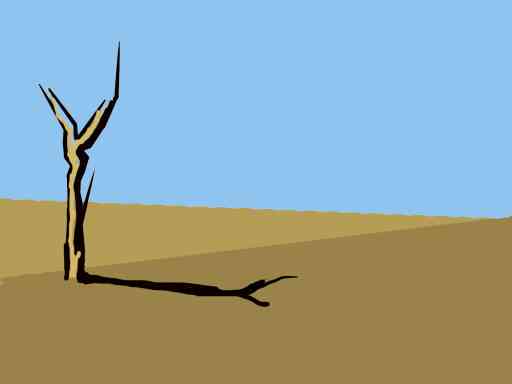

we are trying to create some different styles, any suggestion or comment appreciated
Id Animation & Arts27 November 2007
Artist View…
Let’s talk about it in an artist’s perspective. Before starting anything, we mull over on how it is done, how it will finish, when, and in which medium. Analytical thinking which scientists use. It stays true for any type of creation. In animation filmmaking, it comes under pre-production.
We had made a short film before (Clay animated short ) learning, trial and error method. And now we will try not to make the same mistakes again in the production of this film. Someone might say we name our mistakes as ‘Experience’. Go on.
This is an experimental film. We are working on its style and look currently. We want some very stylistic and different visuals. It can be done using various methods and mediums like pencil, watercolor backgrounds, Photoshop Backgrounds, glass paintings, sand animation and on and on. We are watching masters like Michael Dodok De Wit, Caroline Leaf, Gitanjali Rao and many more with our mouths hung wide open throughout the films. They are awesome. Check out this link - www.acmefilmworks.com, which we came across Gitanjali Rao site. Well for R&D, Internet is the best option.
Pre Production is the stage where you should spend half or more than that of entire films time. We should make the entire film on paper and in our mind first. When we heard the story, everyone visualized it differently. Somebody said black and white for this part of sequence would be better and some think that it should be in a warm color tone to feel out the heat, complementing the story. We are also working on the camera angles and storyboard panels. They are random for now. We are coming up with 2d artwork as well as many digital paintings, in search for the perfect style. It is very important to put everybody’s perspective on the same table to clarify and to know what’s on other’s mind.
Watching films, drawing panels and characters and backgrounds and doing R&D and storyboarding and so much more is extensively increasing our exposure. We are doing many things at a time and that’s where true learning is.
26 November 2007


Subscribe to:
Posts (Atom)